

If you strip it down to the essentials, a homeschool portfolio is simply a collection of records and work samples that show what your child learned over the school year. That’s it. No fancy formatting required. No perfection expected.
Once you understand what actually belongs in a homeschool portfolio and what does not, the whole process becomes far more manageable. Instead of feeling like one more obligation hanging over your head, it turns into a practical tool that helps you stay organized and confident about your homeschool.
Let’s walk through the basics in a way that feels realistic, not intimidating.
Why Homeschool Portfolios Matter
Many homeschool parents feel overwhelmed when they hear the words “homeschool portfolio.” Some worry they’re doing it “wrong.” Others aren’t sure what their state homeschool portfolio requirements are or how much documentation is enough.
The truth? A homeschool portfolio isn’t meant to be stressful. It’s simply a tool to track learning, show progress, and give you confidence that your homeschool is on track.
Understanding homeschool portfolio basics early saves time, reduces stress, and prevents last-minute scrambling at the end of the year.
Why Homeschool Portfolios Matter (And Why They Don’t Have to Be Stressful)
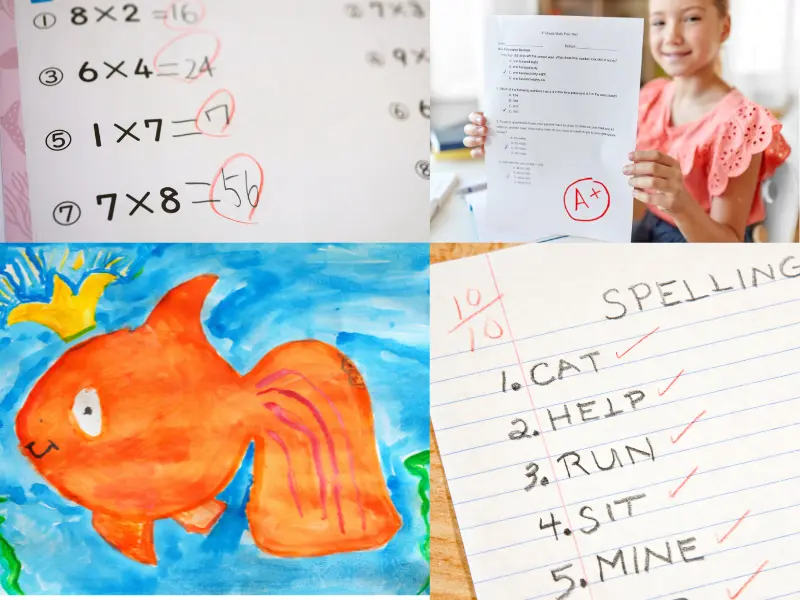
Many homeschool parents tense up when they hear the words “homeschool portfolio.” Often it’s because they are worried about doing it wrong, not saving enough, or misunderstanding their state’s requirements.
Those concerns are understandable. However, a homeschool portfolio is not meant to be a performance or a polished showcase. It exists to do a few very practical things:
- Track learning over time
- Show progress in a clear, concrete way
- Provide documentation if your state or evaluator requires it
- Give you peace of mind that learning is happening
When you understand the basics early on, you avoid the end-of-year scramble where you are digging through drawers and wondering what you should have saved. A little clarity upfront saves a surprising amount of time and stress later.
What Is a Homeschool Portfolio, Really?
A homeschool portfolio is a record of your child’s learning over a specific period, usually one school year. It shows what your child studied, how learning took place, and how skills developed over time.
Families use homeschool portfolios for different reasons, including:
- Personal record keeping
- Meeting state homeschool portfolio requirements
- Annual evaluations
- Building transcripts in the high school years
- Reassurance that homeschooling is on track
At its core, a homeschool portfolio answers one simple question: “What did my child learn this year?“
Everything you include should help answer that question.
What to Include in a Homeschool Portfolio
Every homeschool portfolio looks a little different, and that is exactly how it should be. Think of the items below as a menu rather than a checklist. You do not need all of them. You only need enough to show learning and progress.
Common Homeschool Portfolio Items
- Attendance record – a simple log of learning days. This does not need to be complicated. Many families use a calendar or spreadsheet.
- Reading list – books your child read independently, listened to as audiobooks, or enjoyed together. Short notes or titles alone are both acceptable.
- Work samples – a small selection from subjects like math, writing, science, and history. Choose samples that show effort or improvement, not just perfect work.
- Projects and activities – photos or short descriptions of hands-on learning, experiments, field trips, or creative projects.
- Assessments or tests (optional) – include these only if your homeschool uses them. They are not required for every family.
- Parent notes or progress summaries – brief reflections on strengths, challenges, or noticeable growth over the year.
A helpful rule of thumb is this: you do not need to save everything. You only need enough to show development over time.
Homeschool Portfolio Examples by Age
Sometimes examples make everything click. Below are simple outlines that show what a homeschool portfolio might look like at different stages.
Elementary Homeschool Portfolio Example
- Attendance log
- List of books read aloud or independently
- A few math worksheets showing progress
- One writing sample per month
- Photos of art projects or science activities
This stage is less about volume and more about capturing growth.
Middle School Homeschool Portfolio Example
- Attendance record
- Reading list with short summaries or reflections
- Writing assignments or essays
- Math quizzes or tests
- Photos or descriptions of projects
At this level, portfolios often start showing more independence and longer-term projects.
High School Homeschool Portfolio Example
- Course descriptions or syllabi
- Reading lists by subject
- Major assignments or exams
- Writing samples
- Credits earned and grades, if applicable
High school portfolios tend to be more structured because they often feed into transcripts later on.
Each homeschool portfolio should reflect your child’s learning style and your homeschooling approach. There is no single correct format.
Paper vs. Digital Homeschool Portfolios
Homeschool portfolios can be kept on paper, digitally, or as a mix of both. The best option is the one you will actually maintain.
Paper Homeschool Portfolios
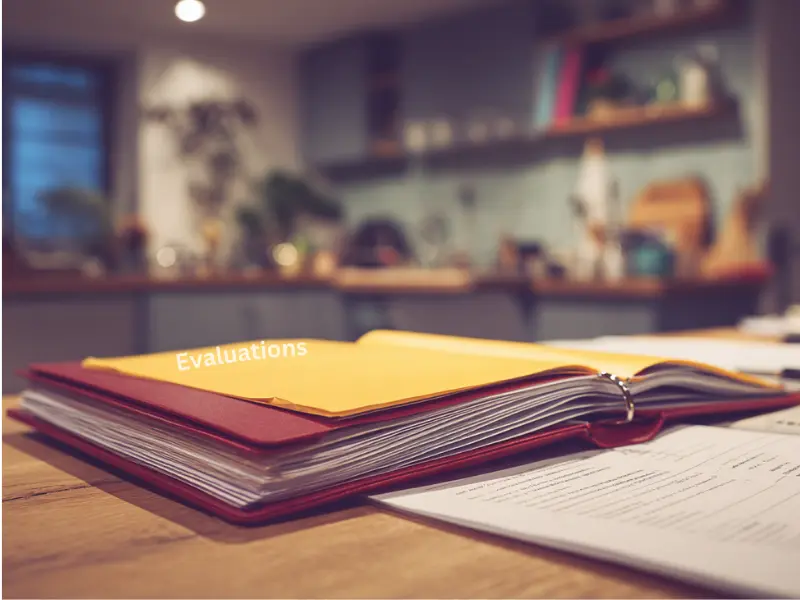
Homeschool portfolios can be kept on paper, digitally, or as a mix of both. The best option is the one you will actually maintain.
Digital Homeschool Portfolios
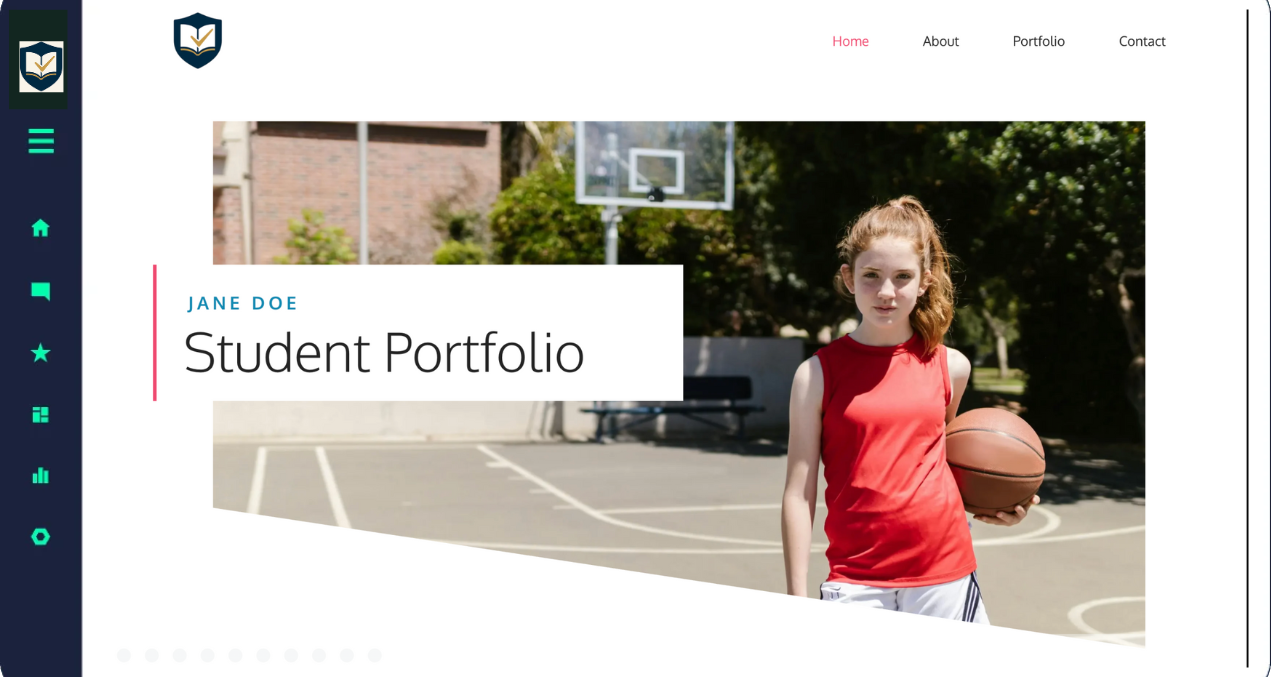
Digital portfolios are especially useful if you want everything stored in one organized online space. They make it easy to upload photos, videos, scanned work, and records, and they are simple to back up or share when needed.
They can also be helpful for students who participate in activities outside the home, such as athletics or arts programs, where sharing work digitally is convenient.
If you want step-by-step help with creating and organizing one, you can explore our full digital guide at Homeschool-Portfolios.
Both paper and digital portfolios are valid. Consistency matters more than format.
Common Homeschool Portfolio Mistakes to Avoid
Most portfolio stress comes from a few predictable pitfalls:
- Trying to save everything
- Waiting until the end of the year to start
- Comparing your homeschool portfolio to someone else’s
- Focusing on how it looks instead of how useful it is
A strong homeschool portfolio is functional, organized, and honest. It does not need to be impressive.
How to Start Your Homeschool Portfolio Without Overthinking It
If you are new to homeschooling or documentation, start small.
- Choose one subject
- Save one or two samples
- Add to it regularly
Over time, your homeschool portfolio will grow naturally into a meaningful record of learning. You do not need to build it all at once.
Final Thoughts: Simple and Consistent Wins
A homeschool portfolio does not need to be complicated to be effective. Whether you prefer a paper binder or a digital system, the key is consistency. Saving a few thoughtful samples each month adds up quickly.
By the end of the year, you will have a clear, confident record of your child’s learning without the overwhelm.

For ready-to-use homeschool portfolio examples and done-for-you options, visit Homeschool-Portfolios.com, a resource built to make homeschool record keeping simpler and more sustainable.