

Can Homeschool Kids Play School Sports in Massachusetts?
Updated November 2026
Can homeschool kids play school sports in Massachusetts? Yes, but participation depends on the school district’s policies and the student’s eligibility. Unlike students enrolled in public schools, homeschooled children are not automatically entitled to join school athletic teams.
Massachusetts allows local school districts to decide whether homeschooled students can participate in public school programs, including athletics. For high school students, the Massachusetts Interscholastic Athletic Association (MIAA) also establishes requirements for participation in interscholastic sports.
If your child wants to play basketball, soccer, baseball, football, or another school sport, understanding these rules can help you identify the opportunities available.
This guide explains Massachusetts homeschool sports eligibility, how to approach your local school district, and what alternatives are available when public school athletics are not an option.
Can Homeschool Kids Play Public School Sports in Massachusetts?
Homeschool kids can play public school sports in Massachusetts if their school district permits participation and they meet the applicable athletic eligibility requirements.
However, the state does not require every public school district to open its sports programs to homeschool students.
According to the Massachusetts Department of Elementary and Secondary Education (DESE), local school districts have the discretion to allow homeschooled students to participate in courses, extracurricular activities, and athletic programs.
That means participation can vary from one community to another.
For example, a homeschooling family in one Massachusetts town may have access to public school sports teams, while a family in a neighboring district may not.
The first step is to contact the school district where your child resides and ask whether it has a policy allowing homeschool students to participate in athletics.
For high school sports governed by the MIAA, additional requirements apply even when the district permits participation. If you live in Chelmsford, MA, I’ll save you a phone call. They don’t allow students to participate in sports.
Massachusetts Homeschool Sports Eligibility and MIAA Requirements
The Massachusetts Interscholastic Athletic Association establishes rules for high school interscholastic athletics at its member schools.
Under Rule 54.1 of the MIAA 2025–2027 Handbook, home-educated students may participate in interscholastic athletics when specific conditions are satisfied.
These rules are particularly important for homeschool families with teenagers who want to join a public high school sports team.
1. The School District Must Allow Homeschool Participation
The local school committee must have adopted a policy regarding participation by home-educated students on high school athletic teams.
The school principal also has responsibilities related to the school’s MIAA membership and enrollment reporting.
Even when the MIAA permits eligible homeschool athletes to compete, individual school districts retain authority over whether they offer participation opportunities.
Parents should request the district’s current homeschool athletics policy rather than assume that all Massachusetts public schools follow the same procedure.
2. The Homeschool Education Plan Must Be Approved
A home-educated student’s educational plan must be approved by the public school superintendent or an authorized designee.
Massachusetts requires families educating children of compulsory school age at home to obtain approval from their local school district.
If your child wants to participate in school athletics, keep a copy of the approved homeschool plan and any written correspondence from the district.
These documents may be needed when school officials review athletic eligibility.
3. The Student Must Meet Grade-Level and Residency Requirements
For MIAA high school athletics, the school principal determines the homeschool student’s appropriate grade placement, from grades 9 through 12, based on age and the educational plan.
The student must also reside in the district serving the high school and live with their parent or legal guardian in the family residence.
In districts with multiple comprehensive high schools, a homeschool student must be assigned to the appropriate school of record using the district’s established process.
This means homeschooled athletes cannot automatically choose a public school team outside their assigned school.
4. Homeschool Athletes Must Meet Academic Eligibility Rules
Homeschool students participating in MIAA athletics must meet the applicable academic eligibility requirements.
The school principal is responsible for determining whether the student meets the standards required for athletic participation and certifying academic eligibility according to MIAA procedures.
Families should ask the athletic director how the district evaluates homeschool academic progress.
Documentation may include educational plans, progress reports, or other information accepted under the district’s procedures.
Standardized testing is not established as a universal requirement for homeschool athletic participation under MIAA Rule 54.1.
5. Other Athletic Eligibility Requirements Still Apply
Homeschooled student-athletes must satisfy applicable MIAA requirements involving age, transfers, and the number of seasons of athletic eligibility.
They must also meet relevant participation requirements, including medical clearance and other school athletic procedures.
Being eligible to participate does not guarantee a position on a team. Homeschool students may still need to complete tryouts and meet team selection standards.
For a final eligibility determination, families should work directly with the school’s athletic director and principal.
How to Join a Public School Sports Team as a Homeschooler
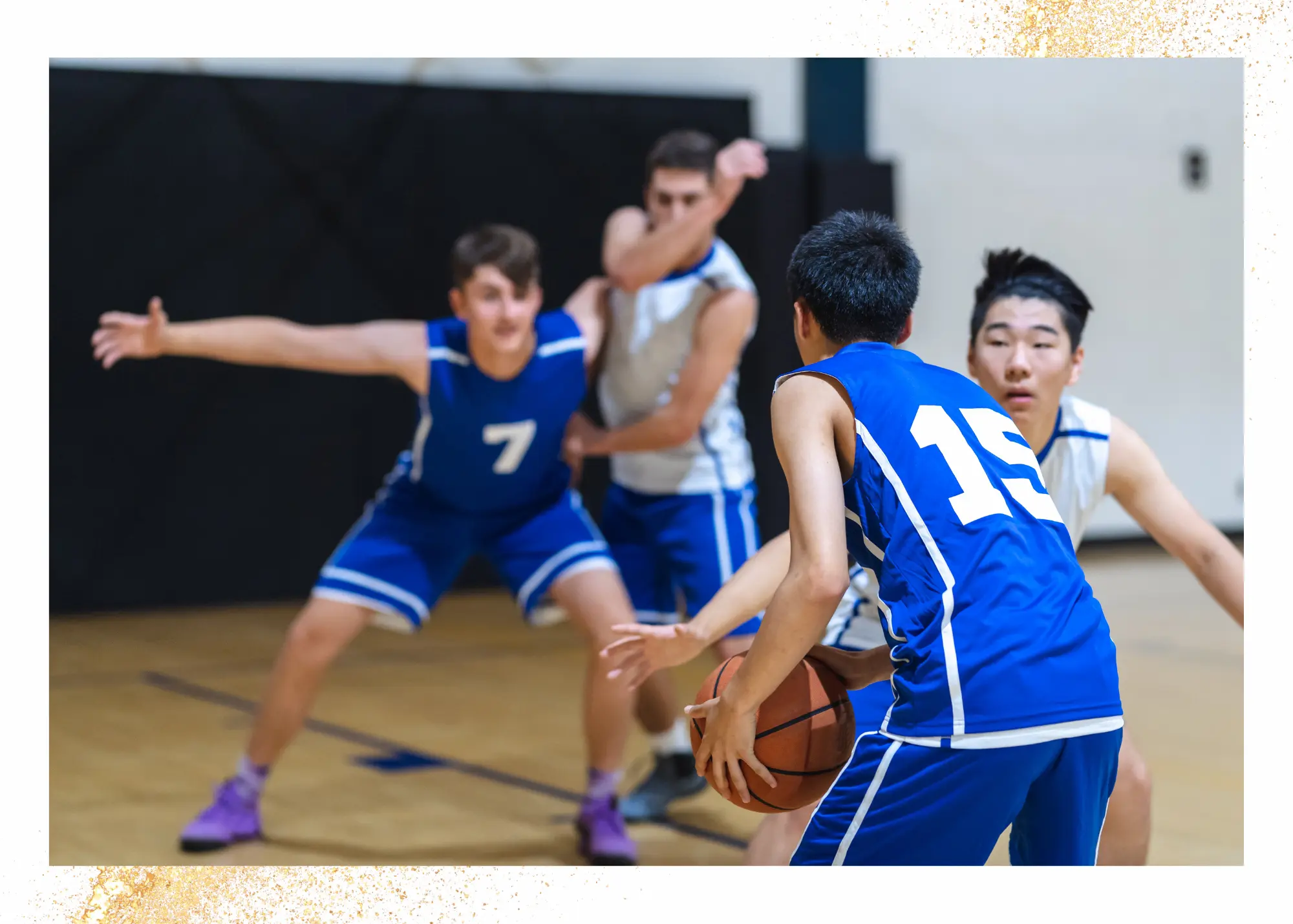
If your child wants to participate in public school athletics, begin planning well before the season starts.
The process is easier when you understand the district’s policies and have the necessary homeschool documentation ready.
Step 1: Contact Your Local School District
Start with the superintendent’s office or the athletic director at your assigned public high school.
Ask whether homeschooled students can participate in school sports and request the district’s written policy.
You should also find out whether the rules differ for elementary, middle school, and high school students.
Step 2: Confirm Your Homeschool Plan Is Approved
Make sure the district has approved your child’s homeschool education plan.
Keep the approval letter or other written documentation available.
Families should not assume that submitting a homeschool plan is the same as receiving approval.
Step 3: Ask About Athletic Eligibility Documentation
Find out what information the school requires before a homeschool student can participate.
Depending on the program and applicable policies, this may include:
- Proof of residency
- An approved homeschool education plan
- Information about academic progress
- Student age and grade placement information
- Medical examination documentation
- Athletic registration paperwork
- Parent or guardian consent forms
Ask which documents are required for your child rather than submitting unnecessary information.
Step 4: Confirm Tryout Dates and Registration Deadlines
Public school sports teams often have specific registration deadlines, preseason requirements, and tryout schedules. This is particularly important for High School students because tryouts usually happen during the summer months before school starts.
Contact the athletic director early to avoid missing important dates.
Even if your child meets the eligibility requirements, late registration may create complications.
Step 5: Request Written Confirmation
After completing the process, request written confirmation of the student’s eligibility and any remaining requirements.
If the district does not allow homeschool participation, ask for a copy of its current policy so you understand the decision. There are some cases where parents have attended school committee meetings to vouch for this policy to change, but I have yet to see them change their decision.
Families can then explore other athletic opportunities without relying on uncertain expectations. Such as local clubs or other town clubs that are not associated with the local schools.
Can Homeschoolers Play Sports for Private Schools?
Parents sometimes ask whether homeschooled children can join private school sports teams instead of public school athletic programs.
The answer depends on the private school’s policies and the rules of any athletic association governing its teams.
Private schools may establish enrollment requirements for student-athletes, and schools participating in MIAA competitions must follow applicable eligibility rules.
A student who is not enrolled at a private school should not assume they can join its basketball, soccer, or other athletic teams.
If you’re considering this option, contact the school’s admissions office or athletic director.
Ask whether the school permits non-enrolled homeschool students to participate, whether full or partial enrollment is required, and what athletic eligibility rules apply.
Private sports clubs and independent athletic organizations may provide additional opportunities when school-based participation is unavailable.
What Sports Can Homeschooled Kids Play Outside Public School?
Homeschooled kids can participate in many sports without joining a public school team.
Community recreational leagues, private sports clubs, youth organizations, and homeschool groups can provide opportunities for physical activity and athletic development.
These alternatives are especially useful for families whose districts do not permit homeschool participation in school athletics.
Community Sports Leagues for Homeschoolers
Community recreation departments and local sports organizations frequently offer programs for children from different educational backgrounds.
Depending on your location, activities may include:
- Youth basketball
- Soccer
- Baseball and softball
- Swimming
- Tennis
- Track and field
- Volleyball
- Flag football
Some programs are recreational, while others organize competitive teams and seasonal tournaments.
Before registering, check the program’s age limits, residency requirements, fees, and schedule.
Community leagues can be a practical way for homeschooled children to make friends, develop teamwork skills, and participate in organized sports.
Homeschool Sports Leagues and Co-ops in Massachusetts
Some homeschooling families organize athletic activities through homeschool groups, learning co-ops, and community networks.
These may include recreational basketball, group fitness, physical education classes, hiking, or informal team sports.
Unlike public school athletics, homeschool sports groups may offer more flexible scheduling and mixed-age participation.
However, opportunities vary by location. Not every Massachusetts homeschool group maintains an organized sports league.
Parents can check local homeschool associations, regional online communities, and existing co-ops to find available programs.
Private Sports Clubs and Athletic Training
Private athletic organizations may offer another option for homeschool students interested in competitive sports.
Examples include basketball clubs, soccer academies, gymnastics programs, swimming teams, and martial arts schools.
These programs can provide structured coaching, regular practices, and opportunities to compete.
For homeschooled teenagers pursuing advanced athletic development, families should also consider the program’s competition level, travel commitments, coaching experience, and total costs.
A private sports program is not automatically a substitute for high school interscholastic athletics, so families with specific college athletic goals should investigate the requirements that apply to their chosen pathway.
YMCA and Local Recreation Programs
YMCA branches, municipal recreation departments, and community centers may offer swimming, basketball, fitness, and other youth activities.
These programs can be useful for homeschooled children who want regular physical education without joining a highly competitive team.
Program availability, age requirements, and schedules vary, so contact the organization directly for current information.
How to Find Homeschool Basketball, Soccer, and Other Sports Near You
Finding sports for homeschoolers near you often starts with identifying which organizations accept children who are not enrolled in traditional schools.
Rather than searching only for homeschool-specific leagues, consider community programs that welcome all eligible children.
Start with your town’s recreation department, YMCA, local youth sports associations, and private athletic clubs.
For example, parents searching for homeschool basketball near them can contact local basketball leagues and ask whether homeschool students are eligible to register. Facebook groups are also a great resource for finding this type of information.
The same approach works for soccer, baseball, swimming, and other sports.
Before selecting a program, consider:
- Age group: Does the organization offer activities for your child’s age and skill level?
- Schedule: Can your family accommodate regular practices and competitions?
- Location: How much travel will be required?
- Cost: Are uniforms, equipment, tournaments, or travel expenses included?
- Competition level: Is the program recreational or focused on advanced athletic development?
- Eligibility: Are there residency, enrollment, or organizational membership requirements?
For younger homeschool students, local recreational leagues may provide everything needed.
Older students pursuing competitive athletics may benefit from exploring more specialized programs.
Homeschool Sports and Physical Education Requirements in Massachusetts
Participating in organized sports can be one way to include physical education in a homeschool program.
Massachusetts homeschool education plans are reviewed by local districts, which consider whether the proposed education provides instruction consistent with the state’s legal requirements.
Homeschooling Growth in Massachusetts
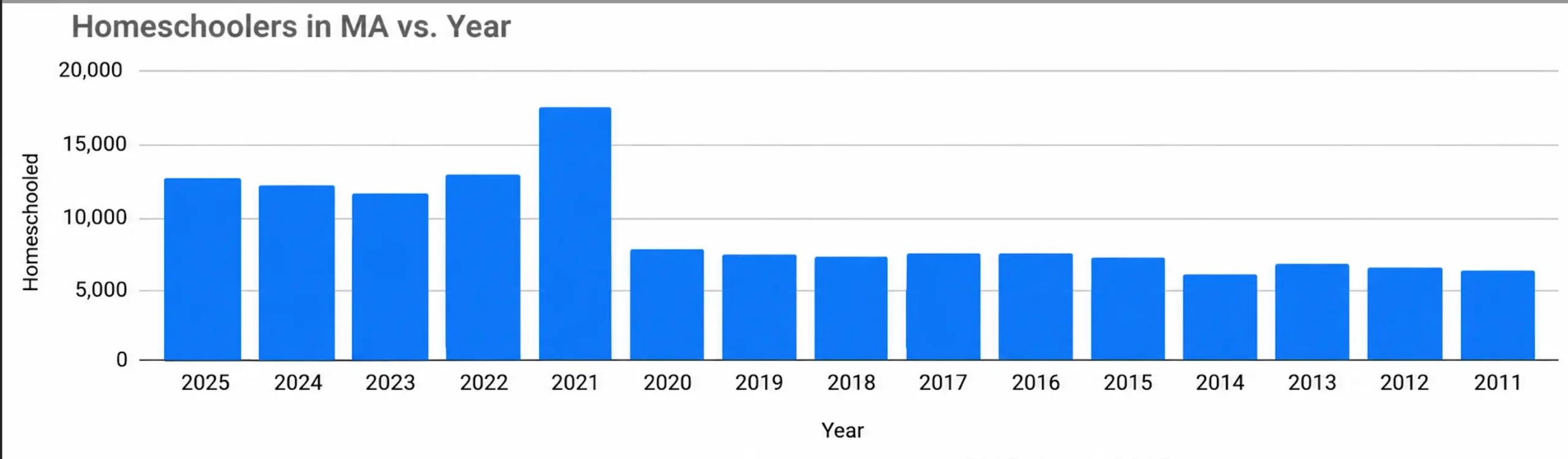
Homeschooled students in MA between 2011 and 2025. Source Dese
Physical education is among the subjects identified under Massachusetts education law.
Families can incorporate physical activity through organized team sports, individual athletics, outdoor recreation, fitness training, and other age-appropriate activities.
A child does not necessarily need to play on a school team to receive meaningful physical education.
For example, a homeschool physical education plan might include regular swimming lessons, basketball practice, hiking, cycling, or personal fitness goals.
The appropriate activities depend on the student’s age, interests, abilities, and educational needs.
Parents should confirm any documentation or evaluation expectations with their local school district.
How to Document Homeschool Sports in a Student Portfolio
Sports participation can provide useful evidence of a homeschool student’s physical education and extracurricular learning.
Even when a student does not participate in public school athletics, families can keep records showing involvement in recreational leagues, fitness activities, and individual sports.
A homeschool portfolio might include:
- Physical education activity logs
- Practice and competition schedules
- Sports participation certificates
- Fitness goals and progress records
- Photographs of projects or activities
- Coach evaluations or feedback
- Awards and achievements
- Written reflections on teamwork, discipline, and personal development
For example, a homeschooled child who participates in a community soccer league might document weekly practices, games, and skills developed during the season.
A high school student involved in competitive swimming might maintain records of training schedules, competitions, and personal achievements.
These materials can help families organize educational records and prepare information for future academic or extracurricular applications.
However, a homeschool portfolio does not automatically satisfy MIAA athletic eligibility requirements or replace the documentation requested by a local school district.
If your child plans to participate in public school sports, confirm the applicable documentation requirements separately.
Frequently Asked Questions About Homeschool Sports in Massachusetts
Can Homeschooled Kids Play Sports?
Yes. Homeschooled children can participate in community sports leagues, recreational programs, private athletic clubs, and other organized activities, subject to each organization’s eligibility rules.
Participation in public school sports depends on local district policies and applicable athletic requirements.
Can Homeschool Kids Play School Sports?
Yes, in some Massachusetts school districts. Local school committees decide whether to permit homeschooled students to participate in public school athletics.
For MIAA-governed high school sports, students must also meet Rule 54.1 and other applicable eligibility standards.
Can Homeschool Kids Play Public School Sports Without Enrolling?
Potentially, yes. MIAA Rule 54.1 provides an eligibility pathway for home-educated students, but the district must allow participation and the student must meet the required conditions.
Families should confirm the school’s policy and eligibility process.
Can Homeschoolers Play High School Basketball in Massachusetts?
Yes, if the local school district permits homeschool participation and the student satisfies the applicable MIAA requirements.
Alternative opportunities may also be available through private basketball clubs and community leagues.
Can Homeschoolers Play Sports for Private Schools?
Possibly, but private schools and their athletic associations may have enrollment and eligibility requirements.
Contact the school’s athletic director to determine whether homeschool participation is permitted.
Can Homeschoolers Play Sports in a Different School District?
MIAA homeschool participation is generally tied to the student’s assigned comprehensive high school in their district of residence.
A homeschool student cannot automatically choose another public high school for athletic participation.
Independent clubs and recreational organizations may have different geographic requirements.
Do Homeschool Students Need Standardized Tests to Play Sports?
MIAA Rule 54.1 does not establish a universal standardized testing requirement specifically for home-educated athletes.
However, students must meet academic eligibility requirements, and families should ask the district how academic progress is evaluated and documented.
Can Homeschoolers Join Sports Teams Without a Homeschool Co-op?
Yes. Many community leagues, recreational programs, and private sports clubs operate independently of homeschool co-ops.
Families can contact these organizations directly to learn about registration and eligibility.
Finding the Right Sports Opportunities for Your Homeschooler
Homeschooling does not have to limit a child’s opportunities to participate in sports.
In Massachusetts, access to public school athletics depends on the district’s policies and, for MIAA-governed high school sports, the student’s eligibility.
Start by contacting your local school district if your child wants to join a school team.
If participation isn’t available, explore homeschool sports groups, community leagues, private athletic clubs, and local recreation programs.
Whether your child plays basketball, soccer, swims competitively, or participates in recreational activities, sports can support physical education, teamwork, confidence, and personal development.
Keeping organized records of those experiences can also help document your child’s homeschool education.
Official Resources
- Massachusetts Department of Elementary and Secondary Education: Home Schooling
- MIAA Handbook: High School Athletic Eligibility Rules
- Massachusetts Law About Home Schooling